Dream of ancient wonders and azure seas? Explore the best of Turkey and Greece with our comprehensive guide. Discover efficient itineraries, cultural insights, and practical tips to make your limited vacation time truly spectacular. From bustling bazaars to serene island sunsets, design your ideal adventure.

Bridging Dreams: The Allure of a Combined Turkey and Greece Trip
Imagine yourself haggling for spices in a vibrant Istanbul market, then floating above Cappadocia's fairy chimneys in a hot air balloon at dawn, only to find yourself days later watching a breathtaking sunset over the Aegean from Santorini's white-washed cliffs. A trip combining Turkey and Greece is a dream for many, but fitting everything into a limited vacation window can feel like a daunting task. These two magnificent countries offer a rich tapestry of history, culture, and natural beauty—Turkey with its unique blend of East and West, and Greece as the cradle of Western civilization with its stunning island landscapes. To truly savor both within a compact schedule, like a 7-day or 9-day trip, requires smart planning that balances efficient travel with immersive local experiences. Let's explore how you can turn this incredible bucket-list adventure into a memorable reality.
Finding Your Path: Two Approaches to Your Turkey-Greece Itinerary
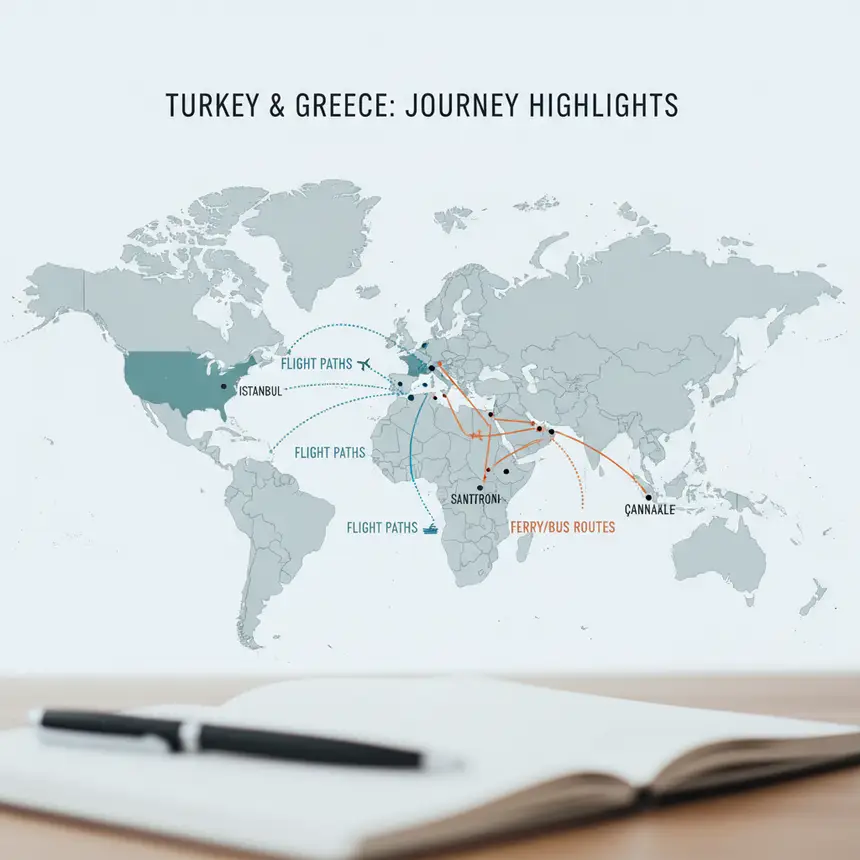
When planning your adventure through Turkey and Greece, you'll generally find two main approaches to itinerary design. The first is the 'Comprehensive Explorer' route, perfect for energetic travelers who want to see as much as possible in a short timeframe. This style often involves utilizing overnight buses and inter-island ferries to minimize daytime travel, packing your days with diverse sights and activities. For instance, a typical intensive journey might start in Istanbul, move through Cappadocia, Pamukkale, and Ephesus, then cross the Aegean to Athens and finally Santorini, offering a rapid but thorough immersion into each region's highlights. The second approach is the 'Relaxed Immersion' route, ideal for those who prefer to reduce travel fatigue and spend more time soaking in the atmosphere of specific cities. This option prioritizes domestic flights to significantly cut down on long-distance travel. It also often includes extended stays, such as two or more nights in Cappadocia, to account for weather-dependent activities like hot air ballooning. By focusing on key hubs like Istanbul, Cappadocia, Athens, and Santorini, and relying on air travel between them, you can avoid the complexities of ferry schedules and long road trips, enjoying a more comfortable and in-depth experience. The key is to choose the strategy that best aligns with your personal travel style and priorities.
※ This post contains affiliate links. I may earn a commission at no extra cost to you.


Unveiling the Gems: Highlights of Turkey and Greece
Turkey and Greece, while geographically close, offer distinct and captivating experiences. In Istanbul, Turkey's vibrant heart, you'll witness a spectacular fusion of Eastern and Western cultures. Iconic landmarks like the Hagia Sophia and the Blue Mosque (Sultan Ahmed Mosque) stand as testaments to ancient empires, their grandeur and intricate artistry leaving visitors in awe. Cappadocia will transport you to another world with its surreal 'fairy chimney' rock formations. Watching dozens of hot air balloons fill the dawn sky is an unforgettable spectacle, and exploring the ancient cave churches and underground cities carved into the rock adds an extra layer of mystery. Pamukkale's brilliant white travertine terraces, formed by mineral-rich thermal waters, are a natural wonder where you can soak your feet in warm pools while admiring the unique landscape.
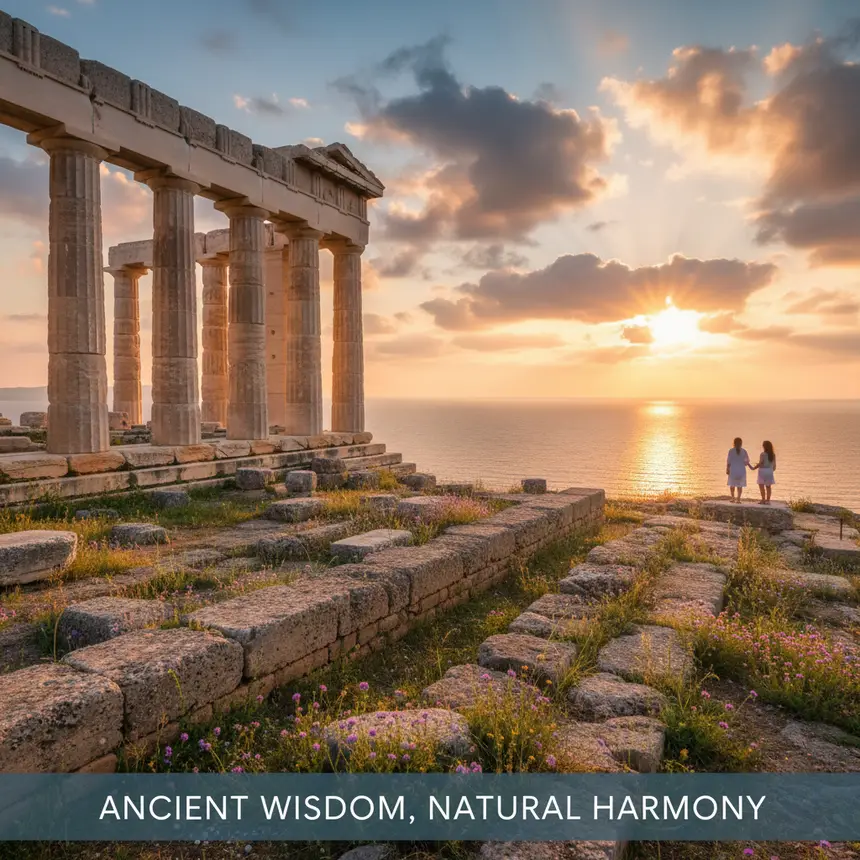
Crossing the Aegean to Greece, you arrive in Athens, the cradle of Western civilization. The Acropolis, crowned by the majestic Parthenon, symbolizes ancient Greek wisdom and artistry, its imposing columns speaking volumes across millennia. Don't miss strolling through the charming Plaka district's narrow streets, where you can savor authentic Greek cuisine in a traditional tavern. Finally, the iconic island of Santorini awaits, a picture-perfect paradise with its white-washed villages perched on cliffs, blue-domed churches, and the dazzling turquoise of the Aegean Sea. The sunset from Oia village is world-renowned, painting the sky and sea in a breathtaking panorama that words can barely describe.
Crossing the Aegean to Greece, you arrive in Athens, the cradle of Western civilization. The Acropolis, crowned by the majestic Parthenon, symbolizes ancient Greek wisdom and artistry, its imposing columns speaking volumes across millennia. Don't miss strolling through the charming Plaka district's narrow streets, where you can savor authentic Greek cuisine in a traditional tavern. Finally, the iconic island of Santorini awaits, a picture-perfect paradise with its white-washed villages perched on cliffs, blue-domed churches, and the dazzling turquoise of the Aegean Sea. The sunset from Oia village is world-renowned, painting the sky and sea in a breathtaking panorama that words can barely describe.
Practical Pointers for a Seamless Journey
To ensure a smooth and enjoyable trip through Turkey and Greece, here are some practical considerations to keep in mind:
- Transportation Choices: Traveling between the two countries typically involves international flights or scenic sea ferries. While flights are more time-efficient, a ferry ride across the Aegean offers a romantic travel experience. When booking domestic flights within either country, especially with budget airlines, always double-check baggage policies. Many low-cost carriers don't include checked luggage in their basic fares, so it’s wise to purchase it in advance if you have more than a carry-on.
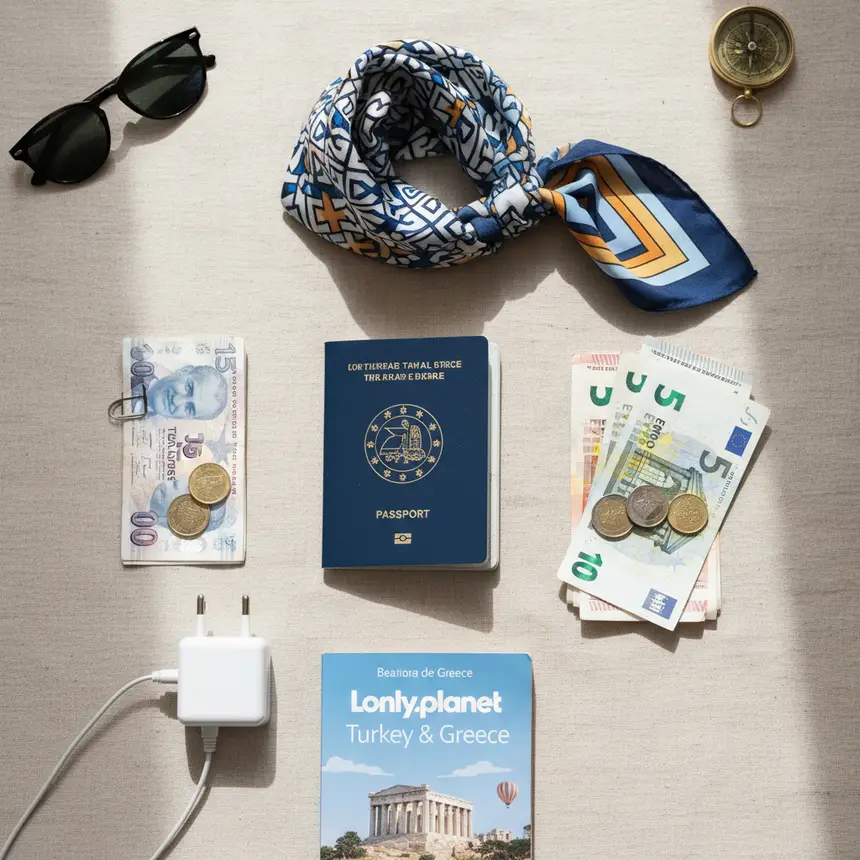
- Local Currency: Turkey uses the Turkish Lira (TRY), while Greece uses the Euro (EUR). It's advisable to carry both currencies, as Euros are often accepted or preferred for major tourist activities and international services in Turkey. You can exchange currency at local banks, exchange offices, or withdraw from ATMs.
- Cultural Etiquette: When visiting mosques in Turkey, it's essential to dress respectfully. Women should cover their heads, shoulders, and knees, so a scarf, long-sleeved top, and long pants or a skirt are recommended. Men should also avoid shorts and sleeveless shirts. Many mosques offer coverings at the entrance, but having your own scarf can be more convenient.
- Safety and Security: Be mindful of your belongings, especially in crowded tourist areas like Istanbul's Grand Bazaar or Athens' Monastiraki Square, where petty theft can occur. Keep valuables secured, carry your bag in front of you, and consider leaving unnecessary cash and important documents (like your passport) in your hotel safe. It's also a good idea to carry a photocopy or digital copy of your passport.
Your Bucket List Awaits: Embark on Your Turkish-Greek Adventure
Beyond mere sightseeing, Turkey and Greece offer profound experiences that can deeply enrich your life. Take a pause from your daily routine to wander through millennia-old ruins, bask in the warm Mediterranean sun, and indulge in exotic flavors and aromas. Whether you envision a thrilling adventure filled with historical exploration or a serene getaway focused on relaxation, these two nations are ready to exceed your expectations. Now is the perfect moment to transform those dream destinations into a tangible reality. Plan your journey at your own pace, creating an itinerary that blends the unique beauty of East and West, and forge memories that will last a lifetime. Your unforgettable Turkish-Greek odyssey is waiting to begin.
Frequently Asked Questions
Q. What is the best time of year to visit Turkey and Greece?
A. Spring (April-May) and Fall (September-October) are generally ideal. The weather is pleasant for sightseeing, and you can avoid the peak summer crowds. Summer (July-August) is hot but perfect for enjoying beach activities and island hopping.
Q. What's an efficient itinerary for a 7-day or 9-day trip covering both countries?
A. A common and efficient route is to start in Istanbul, then fly to Cappadocia in Turkey. From there, take an international flight to Athens, Greece, and then use a high-speed ferry or domestic flight to visit Santorini. Allocating 2-3 days per major city is recommended.
Q. What are the dress code requirements for women when visiting mosques in Turkey?
A. Women are required to cover their heads, shoulders, and knees. It's advisable to carry a scarf or shawl, and wear long-sleeved tops with long pants or skirts. Many mosques provide coverings at the entrance if you don't have your own.
Q. How convenient is public transportation in these countries?
A. Major cities like Istanbul and Athens have extensive public transportation networks (trams, metro, buses) that are generally convenient and efficient. For regions like Cappadocia or Santorini, tour buses, rental cars, or ATVs are often better options for getting around.
Q. What's a reasonable budget to plan for a trip to Turkey and Greece?
A. While it varies greatly by travel style, for a 7-day to 9-day trip, excluding international flights, you might estimate around $1,200 to $2,000 USD per person for accommodation, food, local transport, and activities. This budget could increase if you opt for more flights or luxury accommodations.