Your complete guide to Punakha Dzong in Bhutan! Discover the beauty of this historic architectural marvel where two rivers meet, along with essential travel tips and cultural insights. Packed with must-know information for your mystical Himalayan adventure in Bhutan.

Embarking on a Bhutanese Journey: Where to Begin?
Bhutan, nestled in the majestic Himalayas, offers far more than just scenic beauty; it’s an immersive journey into a living culture and profound spiritual heritage. However, planning a trip to this enigmatic kingdom can feel overwhelming. Without a deeper understanding of its iconic structures, known as 'Dzongs,' travelers might only see them as pretty buildings, missing their true significance. To truly appreciate Bhutan’s historical and cultural heart, some prior knowledge is invaluable. Punakha Dzong, a highlight of any Bhutanese itinerary, captivates with its grandeur, but knowing its backstory elevates the experience. This guide will focus on Punakha Dzong, the spiritual and historical epicenter of Bhutan, providing practical tips and insights to enrich your journey. If you’re ready to uncover the authentic charm of Bhutan, this is your perfect starting point.
Punakha Dzong: The Heart of Bhutan Unveiled
One of the most defining architectural styles you’ll encounter in Bhutan is the 'Dzong.' More than just buildings, Dzongs serve as fortresses, monasteries, and administrative centers all at once—complex hubs of Bhutanese society. Constructed robustly for centuries using only wood, stone, and earth, without a single nail, these structures symbolize the Bhutanese people's wisdom and harmony with nature. While numerous Dzongs exist throughout Bhutan, Punakha Dzong distinctly stands out for its architectural splendor and historical gravity.
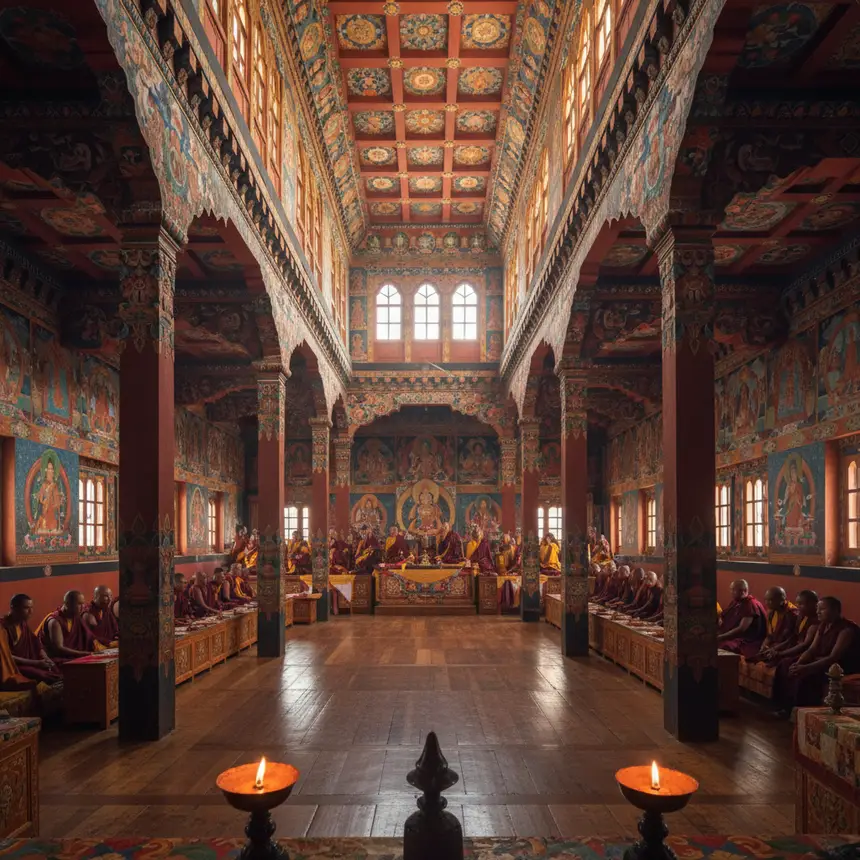
2. The Great Assembly Hall of 100 Pillars: A magnificent space supported by a hundred pillars, each adorned with delicate Buddhist paintings. Monks conduct daily prayers here. The traditional wooden cantilever bridge leading into the Dzong is also a fantastic photo opportunity; be sure to capture its beauty.
- Where Rivers Embrace: Punakha Dzong is uniquely positioned on a narrow peninsula at the confluence of two rivers: the Pho Chhu (Male River) and Mo Chhu (Female River). This water-enveloped setting provides both strategic defense and picture-perfect scenery. In spring, the vibrant purple blossoms of surrounding jacaranda trees complement the emerald river waters, creating an unforgettable spectacle. Located at 1,200 meters (approximately 3,900 feet) above sea level, Punakha enjoys a milder climate than the capital, Thimphu, making it a comfortable visit even during winter.
- Echoes of History: In the early 17th century, Zhabdrung Ngawang Namgyal, the unifier of Bhutan, established this Dzong, laying the foundation for Bhutan as a unified nation. Punakha Dzong served as the capital of Bhutan for centuries and has been the site of pivotal historical events, including the coronation of the first King and the royal wedding of the current King and Queen. Today, it remains the winter residence of the Je Khenpo, Bhutan's Chief Abbot, truly a living testament to tradition and history.
- Navigating the Dzong's Interior: Punakha Dzong is broadly divided into monastic and administrative sections. Visitors can explore designated temple areas along specific routes. Key areas not to miss inside include:
2. The Great Assembly Hall of 100 Pillars: A magnificent space supported by a hundred pillars, each adorned with delicate Buddhist paintings. Monks conduct daily prayers here. The traditional wooden cantilever bridge leading into the Dzong is also a fantastic photo opportunity; be sure to capture its beauty.
- Punakha Dzong Through the Seasons:
- Spring (March-May): The most colorful period when jacaranda trees are in full bloom. Pleasant weather makes it ideal for combining with trekking.
- Autumn (September-November): Clear, crisp skies and golden fields offer the best views of the Himalayas. This season often coincides with major Bhutanese festivals.
- Winter (December-February): Fewer tourists allow for a more serene exploration of the Dzong, and it’s a chance to observe the monks' daily life more intimately.
※ This post contains affiliate links. I may earn a commission at no extra cost to you.

Your Ultimate Checklist for Visiting Punakha Dzong in Bhutan
Bhutan operates a unique tourism system focused on preserving its natural environment and cultural heritage. To visit Punakha Dzong and other areas in Bhutan, it's essential to be aware of certain preparations and guidelines.
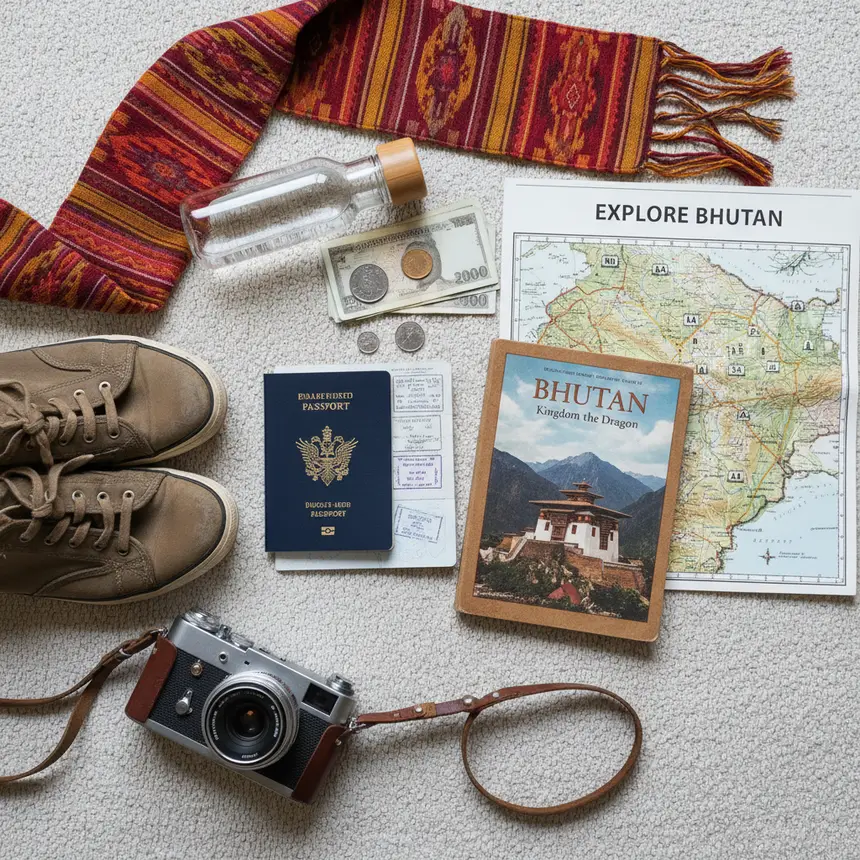
2. Appropriate Attire: When visiting religious sites like the Dzong, dress modestly, ensuring your shoulders and knees are covered. Carrying a scarf or shawl is also a good idea.
3. Footwear Protocol: You'll need to remove your shoes before entering temples, so wear footwear that is easy to slip on and off.
4. Photography Etiquette: While photography is generally allowed in many public areas, it may be restricted in certain sacred spaces or during ongoing ceremonies. Always follow your guide's instructions. When taking photos of people, always ask for their permission first.
5. Carry Water and Snacks: There are no shops inside the Dzong, so it’s wise to bring your own water and perhaps some light snacks for your visit.
6. Local Currency: It’s helpful to carry some Bhutanese Ngultrum or US Dollars for small purchases, souvenirs, or any minor expenses that might arise.
- Essential Bhutan Travel Preparation Checklist:
2. Appropriate Attire: When visiting religious sites like the Dzong, dress modestly, ensuring your shoulders and knees are covered. Carrying a scarf or shawl is also a good idea.
3. Footwear Protocol: You'll need to remove your shoes before entering temples, so wear footwear that is easy to slip on and off.
4. Photography Etiquette: While photography is generally allowed in many public areas, it may be restricted in certain sacred spaces or during ongoing ceremonies. Always follow your guide's instructions. When taking photos of people, always ask for their permission first.
5. Carry Water and Snacks: There are no shops inside the Dzong, so it’s wise to bring your own water and perhaps some light snacks for your visit.
6. Local Currency: It’s helpful to carry some Bhutanese Ngultrum or US Dollars for small purchases, souvenirs, or any minor expenses that might arise.
- Respecting Local Culture and Important Notes:
- A Dzong is not merely a tourist attraction but a sacred place where daily religious activities occur. Maintain a quiet and respectful demeanor during your visit and show deference to monks and locals.
- Contribute to preserving the natural environment around the Dzong. Avoid littering and stick to designated paths.
- Be prepared for fluctuating temperatures by dressing in layers, especially as mornings and evenings can be quite cool.
Frequently Asked Questions
Q. What exactly is Punakha Dzong?
A. Punakha Dzong is one of Bhutan's most beautiful and historically significant architectural marvels. It functions as a fortress, monastery, and administrative center, serving as a complex religious and governmental hub. Its location at the confluence of two rivers offers stunning views, making it a living museum that has witnessed pivotal moments in Bhutanese history.
Q. What's the best time to visit Punakha Dzong?
A. Punakha Dzong offers unique charm in every season, but spring (March-May) is particularly spectacular when the surrounding jacaranda trees are in full bloom. Autumn (September-November) also provides clear skies and excellent Himalayan views, while winter (December-February) allows for a more tranquil visit with fewer crowds.
Q. What should I be mindful of when visiting Punakha Dzong?
A. Since it's a religious site, dress modestly, covering your shoulders and knees. You'll need to remove your shoes inside temples, and photography might be restricted in certain areas, so always follow your guide's advice. Maintaining a quiet and respectful demeanor is crucial to honor the local culture.
Q. Can I travel independently in Bhutan?
A. No, independent travel is not permitted in Bhutan. All tourists must travel with a licensed local guide arranged through a Bhutanese government-approved tour operator. This policy helps preserve Bhutan's unique culture and natural environment for future generations.